

Boston Medical Center – Main Lobby Expansion & Fire Alarm Upgrade

Code Red Consultants partnered with Boston Medical Center, Walsh Brothers Incorporated, and DLR Group (formerly Tsoi Kobus Design) to provide code consulting services, NFPA 241 construction fire safety consulting, impairment planning, interim life safety measure (ILSM) risk analysis, and fire alarm design services for the Boston Medical Center Main Lobby Expansion project. The project established a central entrance for patients and visitors by expanding the Menino and Yawkey Buildings and linking their lobbies, all while hospital operations continued without interruption during multi-phase construction. The project scope also included the introduction of a new retail pharmacy, an expanded emergency department, and the extension of the cafeteria seating.

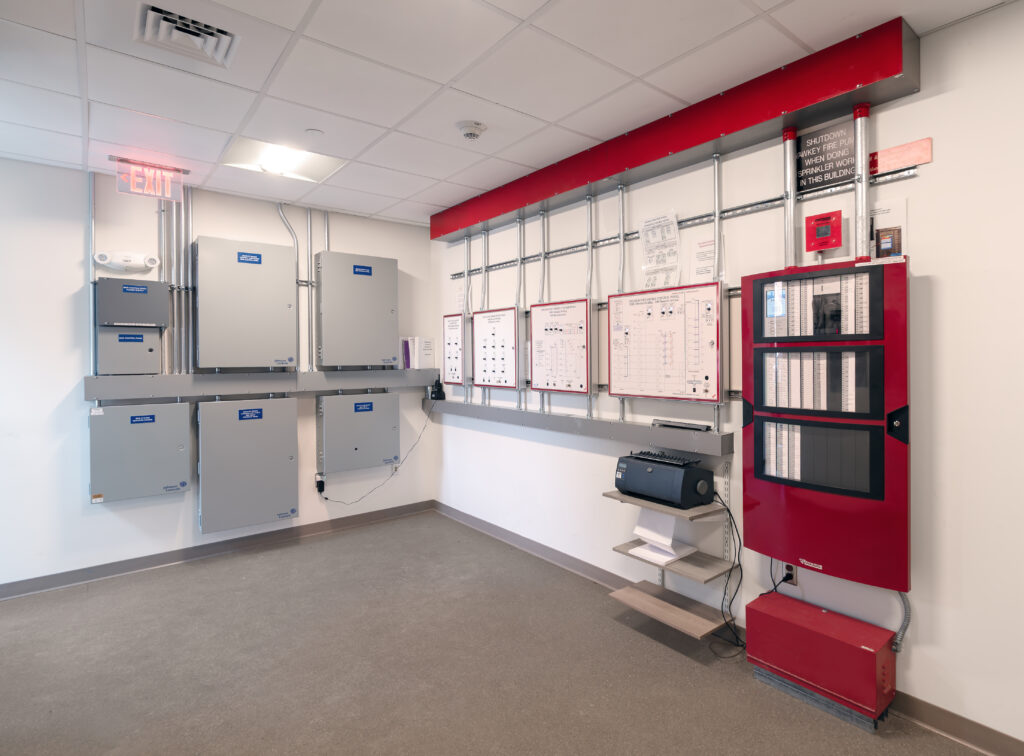
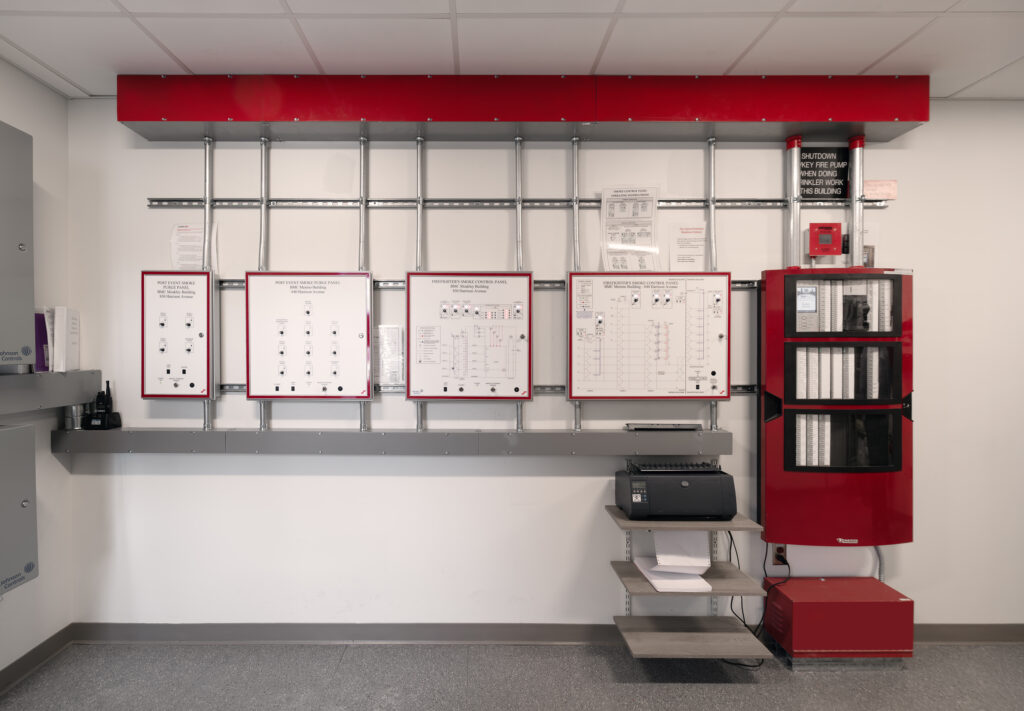
A key challenge of the project was relocating the fire command center for the Menino and Moakley Buildings, requiring the transfer of all major fire alarm and smoke control infrastructure to a new location within the expanded lobby. Serving as Engineer of Record, Code Red Consultants designed the new fire alarm system and its integration with upgraded smoke control panels, including a building-wide upgrade from an EST-3 to an EST-4 networked system. Extensive coordination and detailed phasing were critical to minimizing disruption to patients, staff, and critical hospital functions.

Through careful design planning and close field coordination with the integrated project team, the relocation of the fire command center and the replacement of the fire alarm backbone were completed without any major interruption to patient care or hospital operations. Code Red Consultants also served as the smoke control special inspector, supporting testing, verification, and timely turnover of key life safety systems to ensure the successful delivery of this high-profile, safety-critical healthcare project.
 

Location

Boston, MA

Size

4,500 sf addition and 13,000 sf renovation

Cost

$47M

Completion

2025

Rendering Credit

DLR Group (formerly Tsoi Kobus Design) – Chris Goldthwaite

Boston Medical Center – Main Lobby Expansion & Fire Alarm Upgrade

Code Red Consultants partnered with Boston Medical Center, Walsh Brothers Incorporated, and DLR Group (formerly Tsoi Kobus Design) to provide code consulting services, NFPA 241 construction fire safety consulting, impairment planning, interim life safety measure (ILSM) risk analysis, and fire alarm design services for the Boston Medical Center Main Lobby Expansion project. The project established a central entrance for patients and visitors by expanding the Menino and Yawkey Buildings and linking their lobbies, all while hospital operations continued without interruption during multi-phase construction. The project scope also included the introduction of a new retail pharmacy, an expanded emergency department, and the extension of the cafeteria seating.

A key challenge of the project was relocating the fire command center for the Menino and Moakley Buildings, requiring the transfer of all major fire alarm and smoke control infrastructure to a new location within the expanded lobby. Serving as Engineer of Record, Code Red Consultants designed the new fire alarm system and its integration with upgraded smoke control panels, including a building-wide upgrade from an EST-3 to an EST-4 networked system. Extensive coordination and detailed phasing were critical to minimizing disruption to patients, staff, and critical hospital functions.

Through careful design planning and close field coordination with the integrated project team, the relocation of the fire command center and the replacement of the fire alarm backbone were completed without any major interruption to patient care or hospital operations. Code Red Consultants also served as the smoke control special inspector, supporting testing, verification, and timely turnover of key life safety systems to ensure the successful delivery of this high-profile, safety-critical healthcare project.

Johns Hopkins University Bloomberg Student Center

The new Bloomberg Student Center at Johns Hopkins University is a vibrant hub for student life and collaboration, designed to foster connection, creativity, and community across campus. Spanning approximately 150,000 SF, the facility offers spaces for dining, relaxation, creative and performing arts, and student support services, creating a flexible, light-filled environment that accommodates a wide variety of student activities. The building features a distinctive design with interconnected, stepped roof planes. Its mass timber structure provides warmth and acoustic comfort while supporting the university’s sustainability goals, resulting in a modern, inviting, and environmentally responsible space for students, faculty, and visitors.

In collaboration with Shepley Bulfinch and Bjarke Ingels Group, Code Red Consultants served as the project’s fire protection, life safety, and accessibility code advisor, working closely with the design team to develop a coordinated strategy that demonstrated compliance with the City of Baltimore’s building and fire codes while supporting the project’s ambitious design vision. A key focus was the development of a performance-based approach for the building’s dramatic atrium, using advanced modeling and analysis to design an effective smoke management strategy that maintained both occupant safety and the openness of the space. Code Red Consultants also partnered with the City of Baltimore Building Department to secure approval for thoughtful, forward-looking solutions, including designing restroom facilities based on anticipated occupant loads and implementing gender-neutral restroom layouts with shared lavatories. Throughout the process, our team addressed the unique challenges associated with mass timber construction and high occupant density, helping the project achieve full code compliance while preserving the architectural intent.

Location

Baltimore, MD

Size

150,000 sq ft

Cost

$250M

Completion

August 2025

Photography Credit

laurian ghinițoiu

Johns Hopkins University Bloomberg Student Center

The new Bloomberg Student Center at Johns Hopkins University is a vibrant hub for student life and collaboration, designed to foster connection, creativity, and community across campus. Spanning approximately 150,000 SF, the facility offers spaces for dining, relaxation, creative and performing arts, and student support services, creating a flexible, light-filled environment that accommodates a wide variety of student activities. The building features a distinctive design with interconnected, stepped roof planes. Its mass timber structure provides warmth and acoustic comfort while supporting the university’s sustainability goals, resulting in a modern, inviting, and environmentally responsible space for students, faculty, and visitors.

In collaboration with Shepley Bulfinch and Bjarke Ingels Group, Code Red Consultants served as the project’s fire protection, life safety, and accessibility code advisor, working closely with the design team to develop a coordinated strategy that demonstrated compliance with the City of Baltimore’s building and fire codes while supporting the project’s ambitious design vision. A key focus was the development of a performance-based approach for the building’s dramatic atrium, using advanced modeling and analysis to design an effective smoke management strategy that maintained both occupant safety and the openness of the space. Code Red Consultants also partnered with the City of Baltimore Building Department to secure approval for thoughtful, forward-looking solutions, including designing restroom facilities based on anticipated occupant loads and implementing gender-neutral restroom layouts with shared lavatories. Throughout the process, our team addressed the unique challenges associated with mass timber construction and high occupant density, helping the project achieve full code compliance while preserving the architectural intent.

Nantucket Airport, Nantucket, MA

The Federal Aviation Administration (FAA) requires all air carrier airports to hold a full-scale emergency exercise every three years. These exercises are meant to test the ability of the airport, local emergency responders, hospitals, and other community agencies to mitigate a large-scale emergency event. Nantucket Memorial Airport conducted this exercise in April 2024, with the participation of their primary emergency response partners, Nantucket Fire Department, Nantucket Police Department, and Nantucket Cottage Hospital.

Code Red Consultants (CRC) assisted Nantucket Memorial Airport in planning and executing the 2024 Full Scale Exercise. CRC facilitated meetings with emergency response stakeholders to determine exercise goals beginning in November 2023, with individual objectives and key results created for each goal over the next several months. CRC used these goals and objectives to develop an exercise plan, controller-evaluator’s handbook, and evaluator guide for the exercise following the U.S. Department of Homeland Security HSEEP guidelines.

On the day of the exercise, emergency responders faced a simulated aircraft accident, which included 58 student volunteers from Nantucket High School acting as victims. CRC provided a team of controllers and evaluators to coordinate and observe the emergency response, including fire suppression, emergency medical triage, treatment, transport, and incident management. CRC performed a “hot wash” with emergency responders, airport staff, and volunteer victims after the exercise’s conclusion to allow all participants to share their insights and perspectives. Project deliverables included an After-Action Report, which reviewed all aspects of the exercise and identified strengths and areas of improvement as noted by the evaluators.

Completion

May 2024

Nantucket Airport, Nantucket, MA

The Federal Aviation Administration (FAA) requires all air carrier airports to hold a full-scale emergency exercise every three years. These exercises are meant to test the ability of the airport, local emergency responders, hospitals, and other community agencies to mitigate a large-scale emergency event. Nantucket Memorial Airport conducted this exercise in April 2024, with the participation of their primary emergency response partners, Nantucket Fire Department, Nantucket Police Department, and Nantucket Cottage Hospital.

Code Red Consultants (CRC) assisted Nantucket Memorial Airport in planning and executing the 2024 Full Scale Exercise. CRC facilitated meetings with emergency response stakeholders to determine exercise goals beginning in November 2023, with individual objectives and key results created for each goal over the next several months. CRC used these goals and objectives to develop an exercise plan, controller-evaluator’s handbook, and evaluator guide for the exercise following the U.S. Department of Homeland Security HSEEP guidelines.

On the day of the exercise, emergency responders faced a simulated aircraft accident, which included 58 student volunteers from Nantucket High School acting as victims. CRC provided a team of controllers and evaluators to coordinate and observe the emergency response, including fire suppression, emergency medical triage, treatment, transport, and incident management. CRC performed a “hot wash” with emergency responders, airport staff, and volunteer victims after the exercise’s conclusion to allow all participants to share their insights and perspectives. Project deliverables included an After-Action Report, which reviewed all aspects of the exercise and identified strengths and areas of improvement as noted by the evaluators.

Nantucket Memorial Airport Foam System

The Nantucket Memorial Airport has completed its renovation of the airport’s fuel facility. The facility was originally installed in 1998, and was recently upgraded to enhance reliability and to comply with modern fuel quality requirements. Existing piping, pumps, and control equipment were replaced through the “off season” to minimize the impact on aviation customers at the airport.

Code Red Consultants was the Registered Design Professional for the replacement of the existing fire protection and fire alarm system at the fuel facility. The original foam system, also installed in 1998, utilized PFAS-containing Aqueous Film Forming Foam (AFFF) which was to be removed as a part of the project. Code Red Consultants designed and oversaw the installation of a new Fluorine-Free Foam (FFF) fire suppression system to replace the existing AFFF system. Given that FFF technology is new to the market, the project had to balance the design limitations based on the evolving listings and standards that currently exist for this type of equipment, while still providing the appropriate level of fire protection for this hazard. Along with the foam system, the existing fire alarm system was removed and replaced, utilizing linear heat detection to automatically activate the foam system in case of a fire. The fire pump house was additionally reconfigured, to include a new fire pump for the facility. The design additionally had to contend with the corrosive marine environment at the Airport, as the fuel facility is less than 1,800 feet from the Atlantic Ocean.

Location

Nantucket, Mass.

Size

30,000 SF

Cost

$3.3 million

Completion

2022

Nantucket Memorial Airport Foam System

The Nantucket Memorial Airport has completed its renovation of the airport’s fuel facility. The facility was originally installed in 1998, and was recently upgraded to enhance reliability and to comply with modern fuel quality requirements. Existing piping, pumps, and control equipment were replaced through the “off season” to minimize the impact on aviation customers at the airport.

Code Red Consultants was the Registered Design Professional for the replacement of the existing fire protection and fire alarm system at the fuel facility. The original foam system, also installed in 1998, utilized PFAS-containing Aqueous Film Forming Foam (AFFF) which was to be removed as a part of the project. Code Red Consultants designed and oversaw the installation of a new Fluorine-Free Foam (FFF) fire suppression system to replace the existing AFFF system. Given that FFF technology is new to the market, the project had to balance the design limitations based on the evolving listings and standards that currently exist for this type of equipment, while still providing the appropriate level of fire protection for this hazard. Along with the foam system, the existing fire alarm system was removed and replaced, utilizing linear heat detection to automatically activate the foam system in case of a fire. The fire pump house was additionally reconfigured, to include a new fire pump for the facility. The design additionally had to contend with the corrosive marine environment at the Airport, as the fuel facility is less than 1,800 feet from the Atlantic Ocean.

Biogen Building 8

Code Red Consultants served as the Registered Design Professional for the fire alarm system retrofit design project at Biogen Building 8 in Cambridge, MA, where final testing was completed in March of 2022.

The existing 7-story high-rise, mixed-use building contains almost 260,000 gross square feet of laboratories, office space, and assembly areas. Building 8 is also volumetrically connected to the adjacent Building 9 via pedestrian walkway.

The new fire alarm system is a fully addressable Emergency Voice/Alarm Communication System (EVACS) which uses both public mode and private mode signaling, necessitated by the unique occupancies of the building. The new fire alarm system was designed with integration in mind as various ancillary system controls (HVAC/damper operations, elevator recall, A/V overrides, etc.) were transferred from the existing system to the new system. In addition, the new fire alarm system was provided with a dedicated Firefighter’s Smoke Control Panel which migrated control and supervision of the existing smoke control systems from the Building Automation System (BAS) to the fire alarm system in a seamless transition.

Location

125 Broadway, Cambridge, Mass.

Size

257,500 GSF
7 stories

Completion

2022

Biogen Building 8

Code Red Consultants served as the Registered Design Professional for the fire alarm system retrofit design project at Biogen Building 8 in Cambridge, MA, where final testing was completed in March of 2022.

The existing 7-story high-rise, mixed-use building contains almost 260,000 gross square feet of laboratories, office space, and assembly areas. Building 8 is also volumetrically connected to the adjacent Building 9 via pedestrian walkway.

The new fire alarm system is a fully addressable Emergency Voice/Alarm Communication System (EVACS) which uses both public mode and private mode signaling, necessitated by the unique occupancies of the building. The new fire alarm system was designed with integration in mind as various ancillary system controls (HVAC/damper operations, elevator recall, A/V overrides, etc.) were transferred from the existing system to the new system. In addition, the new fire alarm system was provided with a dedicated Firefighter’s Smoke Control Panel which migrated control and supervision of the existing smoke control systems from the Building Automation System (BAS) to the fire alarm system in a seamless transition.

St. Helena’s House

Maloney Properties engaged Code Red Consultants to design a retrofit fire alarm system as well as a retrofit sprinkler system in a residential building located at 89 Union Park Street in Boston. The six-story building contains mostly apartments with some offices and assembly areas, and needed to remain occupied throughout the retrofit. Further, the existing fire alarm and fire sprinkler systems needed to remain in a working manner while the new fire alarm and sprinkler systems were retrofit in parallel.

During the fire sprinkler system installation, it was determined that the existing building contained numerous concealed combustible spaces above the ceilings. Code Red Consultants devised various sprinkler system approaches from NFPA 13 Section 8.15 to apply to these spaces, including sprinklering them, removing the concealed combustible spaces, and reducing the size and location of these spaces to eliminate the need for sprinkler protection.

Code Red Consultants utilized the code requirements in NFPA 13 to propose a novel solution to the concealed combustible spaces. The client will realize large cost savings over time by Code Red Consultants’ code approach relative to the removal of specific fire protection systems that were once part of the existing fire alarm system.

Location

Boston, Mass.

Size

74,700 SF

Cost

$590,000

Completion

2018

Photography Credit

Code Red Consultants

St. Helena’s House

Maloney Properties engaged Code Red Consultants to design a retrofit fire alarm system as well as a retrofit sprinkler system in a residential building located at 89 Union Park Street in Boston. The six-story building contains mostly apartments with some offices and assembly areas, and needed to remain occupied throughout the retrofit. Further, the existing fire alarm and fire sprinkler systems needed to remain in a working manner while the new fire alarm and sprinkler systems were retrofit in parallel.

During the fire sprinkler system installation, it was determined that the existing building contained numerous concealed combustible spaces above the ceilings. Code Red Consultants devised various sprinkler system approaches from NFPA 13 Section 8.15 to apply to these spaces, including sprinklering them, removing the concealed combustible spaces, and reducing the size and location of these spaces to eliminate the need for sprinkler protection.

Code Red Consultants utilized the code requirements in NFPA 13 to propose a novel solution to the concealed combustible spaces. The client will realize large cost savings over time by Code Red Consultants’ code approach relative to the removal of specific fire protection systems that were once part of the existing fire alarm system.

South Bay Expansion

Code Red Consultants worked closely with joint developers EDENS and Pritzker Group, architecture firm Stantec, and general contractor Lee Kennedy Company on this massive 11-acre development and expansion of the existing South Bay Shopping Center in Dorchester. The 700,000 SF mixed-use development added five new buildings and approximately 475 residential units, 120,000 SF of retail space, a 60,000 SF cinema, and a 130-room hotel. A total of five new buildings were built.

The first three buildings achieved early occupancy in November 2017, a significant achievement considering they were erected in the midst of a heightened awareness of construction fire safety in the Commonwealth of Massachusetts. To that end, Code Red Consultants worked in parallel with Lee Kennedy to develop and implement a pre-incident fire plan and construction safety policies that allowed for a phased occupancy and permitted retailers the all-important opportunity to open their doors on Black Friday, and even construction continued on upper levels. This was achieved via continuous negotiations with City of Boston officials, where there was an upfront contract that the fire/life safety systems afforded to building occupants would not be compromised.

Code Red Consultants served as a trusted advisor to EDENS on South Bay, the real estate firm’s first major development project in Boston.

Location

Boston, Mass.

Size

700,000 SF

Cost

$200 million

Completion

2018

Rending Credit

EDENS

South Bay Expansion

Code Red Consultants worked closely with joint developers EDENS and Pritzker Group, architecture firm Stantec, and general contractor Lee Kennedy Company on this massive 11-acre development and expansion of the existing South Bay Shopping Center in Dorchester. The 700,000 SF mixed-use development added five new buildings and approximately 475 residential units, 120,000 SF of retail space, a 60,000 SF cinema, and a 130-room hotel. A total of five new buildings were built.

The first three buildings achieved early occupancy in November 2017, a significant achievement considering they were erected in the midst of a heightened awareness of construction fire safety in the Commonwealth of Massachusetts. To that end, Code Red Consultants worked in parallel with Lee Kennedy to develop and implement a pre-incident fire plan and construction safety policies that allowed for a phased occupancy and permitted retailers the all-important opportunity to open their doors on Black Friday, and even construction continued on upper levels. This was achieved via continuous negotiations with City of Boston officials, where there was an upfront contract that the fire/life safety systems afforded to building occupants would not be compromised.

Code Red Consultants served as a trusted advisor to EDENS on South Bay, the real estate firm’s first major development project in Boston.

New England Baptist Hospital Medical Campus

Code Red Consultants has served as New England Baptist Hospital’s fire protection and life safety code consultant since the firm’s founding in 2013. Services provided include performing annual statement of condition assessments, life safety drawing preparation, fire door inspections, fire stopping inspections, oversight of fire protection and life safety system maintenance and testing, and services associated with assisting the hospital in maintaining Joint Commission and Center for Medicare and Medicaid regulatory compliance. In addition to these services, Code Red Consultants has worked on a number of renovation projects at NEBH, for which the firm has provided fire alarm and sprinkler design and NFPA 241 Construction Fire Safety Plans. The campus of New England Baptist Hospital includes healthcare spaces as well as business occupancies and assembly occupancies dating back to the late 1800’s.

Location

Boston, Mass.

Size

Various

Cost

N/A

Completion

Ongoing

Photography Credit

New England Baptist Hospital

New England Baptist Hospital Medical Campus

Code Red Consultants has served as New England Baptist Hospital’s fire protection and life safety code consultant since the firm’s founding in 2013. Services provided include performing annual statement of condition assessments, life safety drawing preparation, fire door inspections, fire stopping inspections, oversight of fire protection and life safety system maintenance and testing, and services associated with assisting the hospital in maintaining Joint Commission and Center for Medicare and Medicaid regulatory compliance. In addition to these services, Code Red Consultants has worked on a number of renovation projects at NEBH, for which the firm has provided fire alarm and sprinkler design and NFPA 241 Construction Fire Safety Plans. The campus of New England Baptist Hospital includes healthcare spaces as well as business occupancies and assembly occupancies dating back to the late 1800’s.

Hampton Inn

Code Red Consultants was retained to design a retrofit fire alarm system for the Hampton Inn located at 230 Lee Burbank Hwy. in Revere, Mass. The existing seven-story hotel is approximately 125,400 SF, with amenities including conference rooms, dining facilities, and a pool. The building needed to remain occupied and functional throughout the retrofit.

The challenge for this project was to maintain the existing fire alarm system in a working manner while the new fire alarm system was retrofit in parallel – essentially, running two fire alarm systems simultaneously. This required the implementation of wireless smoke detectors in order to initiate elevator recall functionality while the new and old systems were operating jointly during the installation. The new fire alarm system was installed by Davco Security Systems and accepted in phases by the Revere Fire Department. Code Red Consultants’ successful negotiations with Revere Building and Fire Officials provided the project with an extended timeframe for installation, the use of two systems running in parallel, and several code interpretations.

Location

Revere, Mass.

Size

125,400 SF

Cost

N/A

Completion

2017

Photography Credit

Code Red Consultants

Hampton Inn

Code Red Consultants was retained to provide design assistance and third party review services of a retrofit fire alarm system for the Hampton Inn located at 230 Lee Burbank Hwy. in Revere, Mass. The existing seven-story hotel is approximately 125,400 SF, with amenities including conference rooms, dining facilities, and a pool.

The intent of this project was to install a new emergency voice and alarm communication system (EVACS) in an existing, occupied building without affecting the existing fire alarm system. There are several challenges with installing a fire alarm system in an existing building; identifying best-fit installation locations, achieving and maintaining required survivability, etc., all of which is in addition to the prerequisite for the building to remain occupied and functional throughout the retrofit.

The new EVAC system was designed and installed by Davco Security Systems and accepted in phases by the Revere Fire Department. The design team’s successful negotiations with Revere Building and Fire Officials afforded the project an extended timeframe for installation and several code interpretations.